Amplifying Community Voices Through a Community Health Worker-Led Model for Authentic Community Enga
Amplifying Community Voices Through a Community Health Worker-Led Model for Authentic Community Engagement

Abstract
The Enhancing Equity in Cross-Sector Alignment Through Meaningful Community Engagement research project sought to strengthen authentic, equitable collaboration among public health, healthcare, and social service sectors by centering Community Health Workers (CHWs) as co-researchers. The project aimed to model meaningful community engagement (MCE) practices that prioritize trust, shared power, and inclusion of lived experience in decision-making.
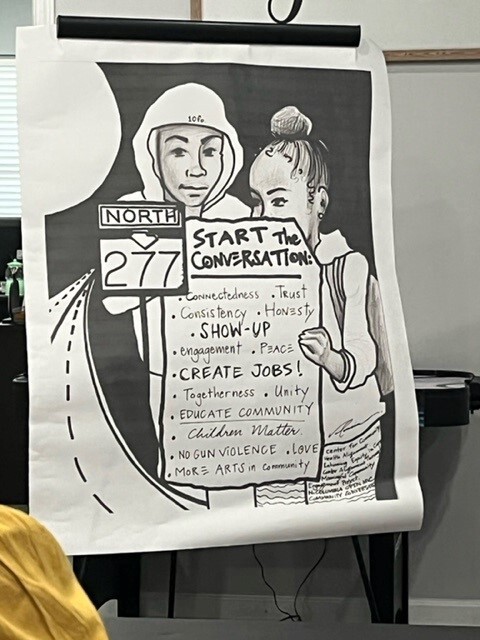
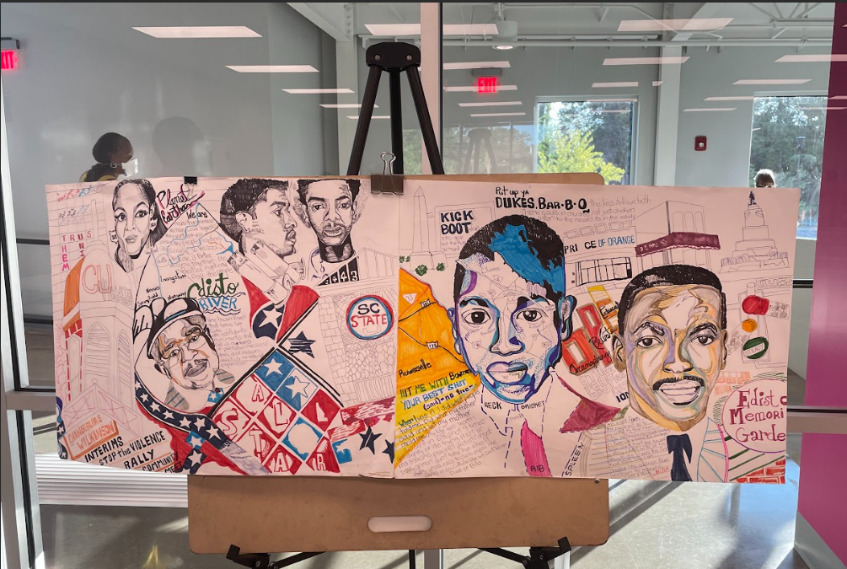
Using a participatory qualitative approach, CHWs were fully integrated into all stages of the research process, from study design and data collection to analysis and dissemination. The research team partnered with four South Carolina communities to explore local perspectives on engagement, conducting open mic community conversations, in-depth interviews, and community data-sharing sessions. CHWs co-facilitated these activities and collaborated on data analysis to identify barriers, facilitators, and strategies for equitable engagement.
Key findings highlighted trust as the foundation of meaningful engagement and underscored the need for cross-sector collaboration to address structural inequities. Participants emphasized the importance of relationship-building, authentic communication, and the inclusion of trusted community voices in shaping solutions.
Findings informed the development of practical tools and frameworks designed to strengthen engagement practices across sectors. Sustainable health improvements depend on CHW-led, community-driven approaches that build trust and foster long-term, equitable partnerships.
INTRODUCTION
Community engagement is critical to public health practice yet continues to be challenging and not always implemented equitably, intentionally, or meaningfully with the communities most impacted by health inequities. The Enhancing Equity in Cross-Sector Alignment Through Meaningful Community Engagement research project sought to shift this paradigm by centering Community Health Workers (CHWs) as leaders and co-researchers in fostering authentic engagement and equitable decision-making across public health, healthcare, and social service sectors.
Authentically or “meaningfully” engaging individuals with lived experience is to intentionally connect with them, and to consider and incorporate their strengths, needs, concerns, values, and expectations early in the process- not as an afterthought or at a point where action on that input is no longer feasible (Hamilton Lopez et al., 2012). Meaningful engagement with individuals with lived experience in communities has been shown to enhance a community’s capacity to effectively address health inequities (Rhodes et al., 2018). Additionally, meaningful community engagement can enhance a community’s ability to address its own health needs and health inequities (Ahmed & Palermo, 2010).
Historically, it has been difficult to establish and maintain trust between communities most impacted by health inequities and “outside” organizations such as academic institutions, health care systems, and public health organizations (Adekunle et al., 2024; Ahmed & Palermo, 2010; Charles et al., 2021; Granovetter, 1985). One potential approach to rebuilding and sustaining trust is through the CHW workforce. As trusted members of the communities they serve, CHWs are uniquely positioned to bridge the divide between institutions and communities (R. Logan, 2022; R. I. Logan & Castañeda, 2020; Strater, 2023). Their lived experience, cultural competence, and community presence make them vital partners in advancing meaningful community engagement and building trust (R. I. Logan et al., 2025; R. I. Logan & Strater, 2024; Strater & Logan, 2025).
The American Public Health Association defines CHWs as trusted, knowledgeable frontline health providers who have deep relationships with the communities they serve (Covert et al., 2019). One of the core CHW roles is to advocate for and build the capacity of communities (Matthew et al., 2017). CHWs are bridges into communities, can shed light on community needs and assets, and can foster partnerships with other sectors (R. I. Logan, 2018; Mayfield-Johnson et al., 2014). Additionally, they can inform and facilitate participatory research principles to include meaningful community engagement, mutual learning, action-reflection, and commitment to sustainability (Rodela et al., 2021; Smith & Blumenthal, 2012). CHWs serving in participatory research projects have been shown to not only represent the views of the community on important health issues but also create awareness of the many challenges of communities experiencing inequities, while maintaining an asset-based approach (Gustafson et al., 2018; Wennerstrom et al., 2011).
This study examined how the engagement of CHWs as co-researchers identified and modeled practices to strengthen authentic, equitable collaboration among public health, healthcare, and social service sectors.
To read the full article CLICK HERE